Invitations to treat, unilateral offers, and the thin legal line that every Kenyan business from the market stall to the multinational crosses more often than it realizes. A comprehensive guide to when your marketing becomes your legal obligation.
Contract Law | Consumer Protection Act 2012 | Competition Authority of Kenya | World & African Case Law | Digital Advertising
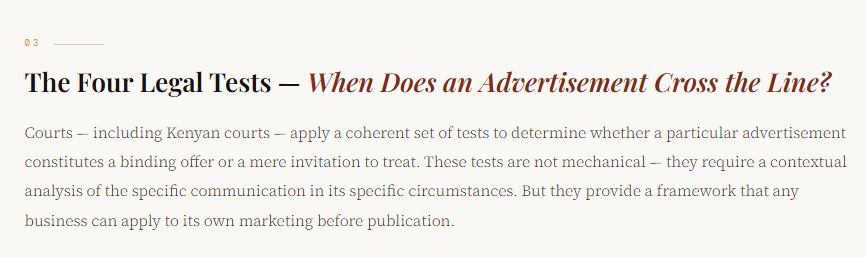
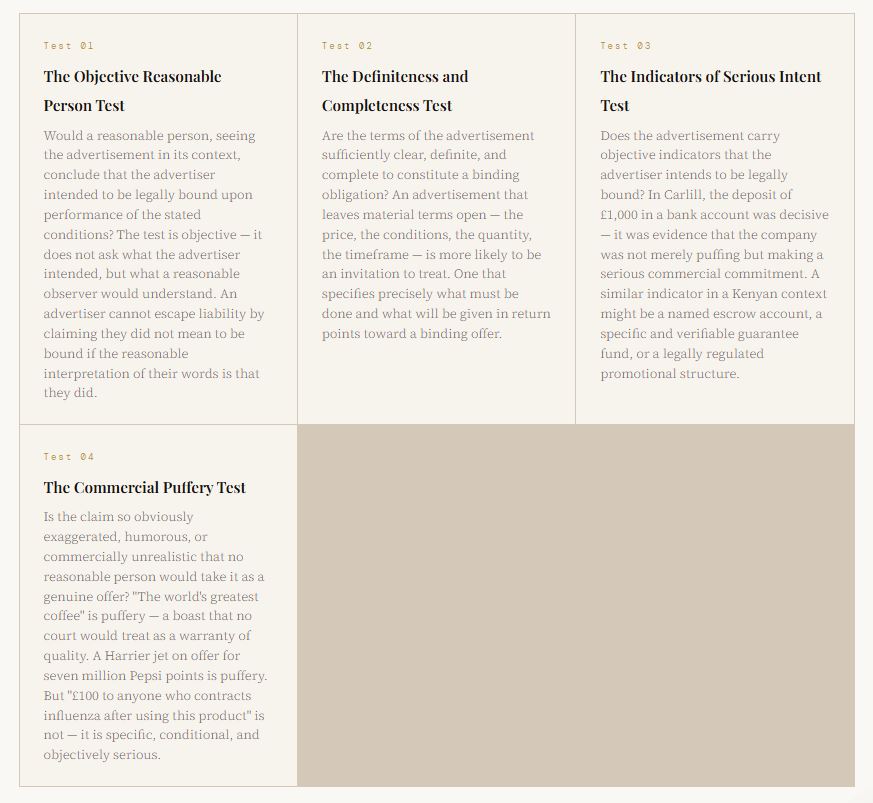

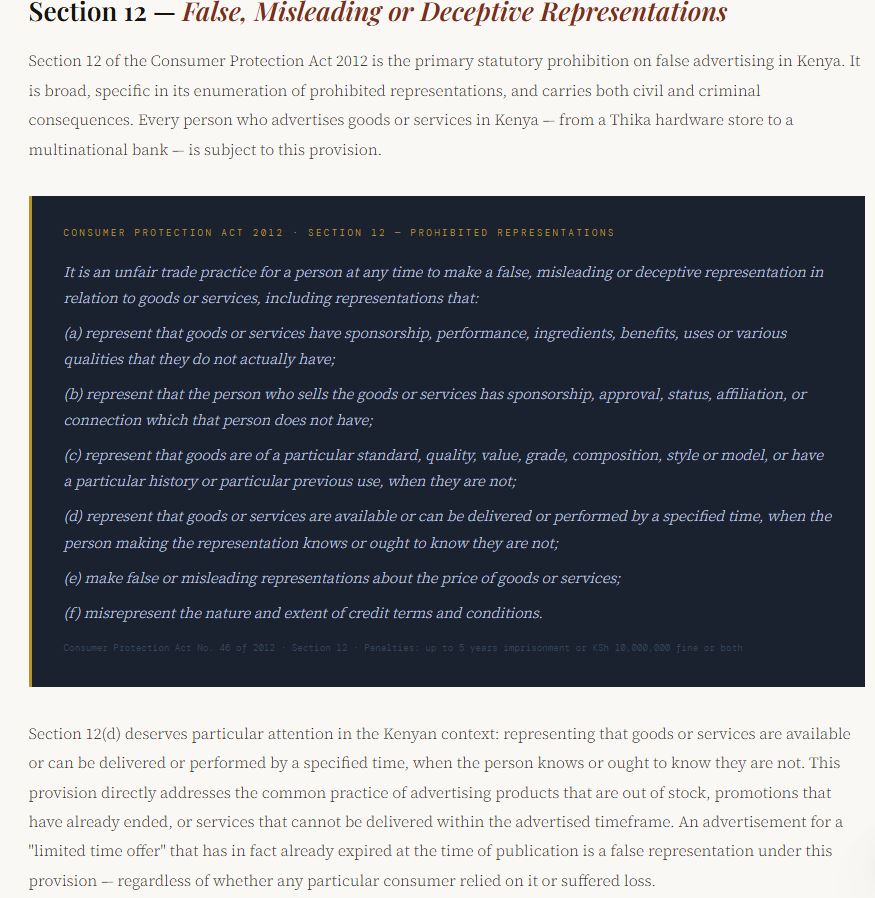
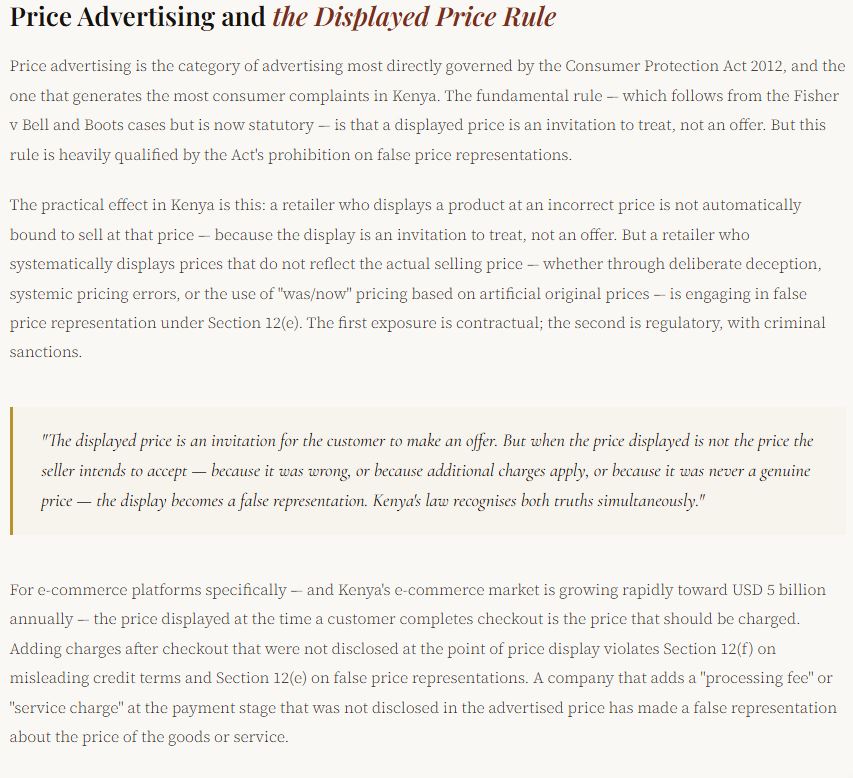
The phrase “knows or ought to know” is significant: it establishes a negligence standard. A company does not escape liability merely by claiming it did not know the promotion had ended. If a reasonable business in their position would have known — because their inventory management systems should have flagged the stock out, or because the promotional period was clearly stated internally they bear responsibility for the false representation.
Digital and Social Media Advertising — The New Frontier
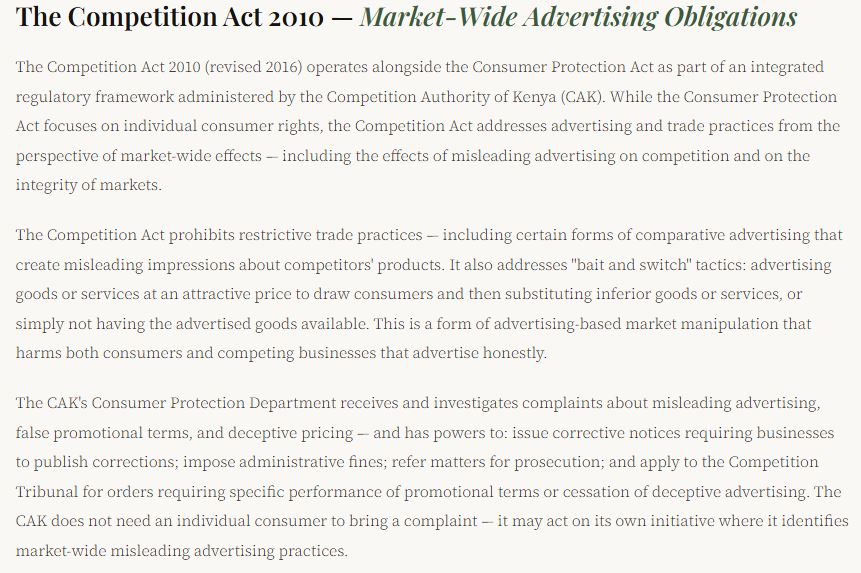
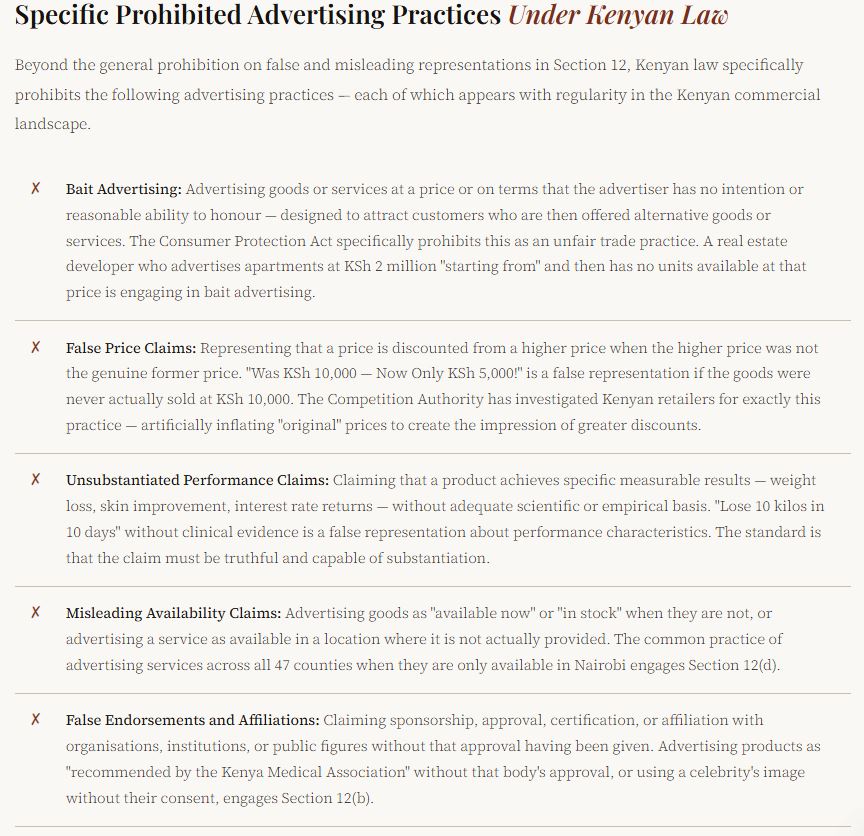
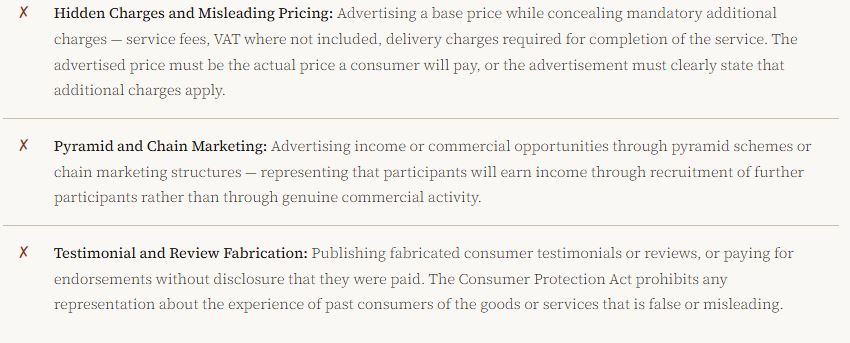
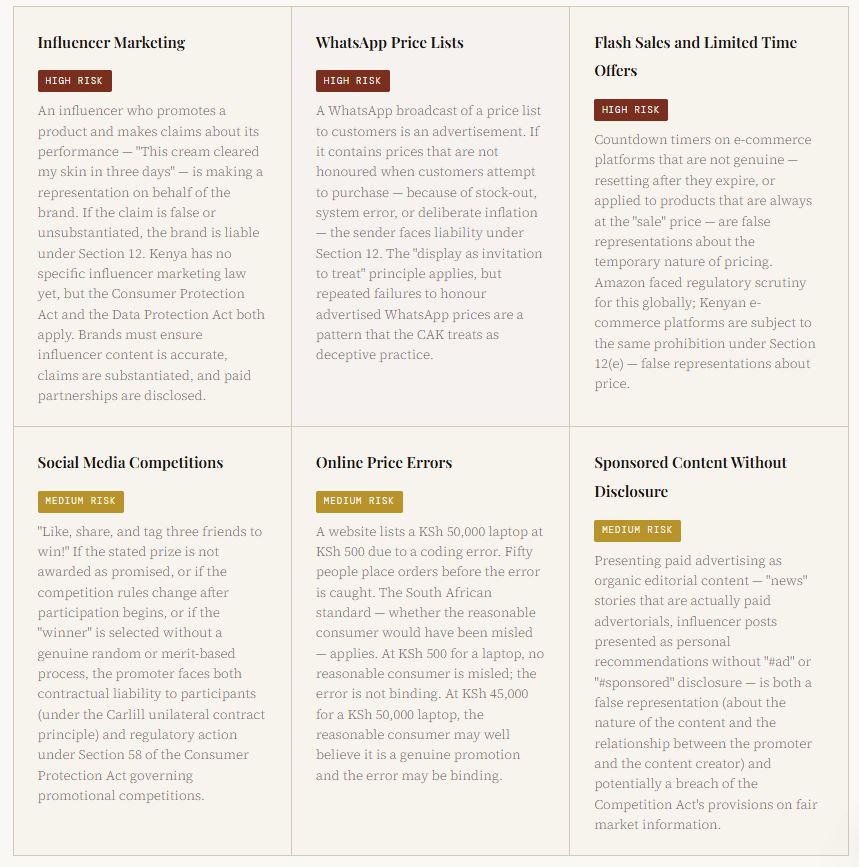
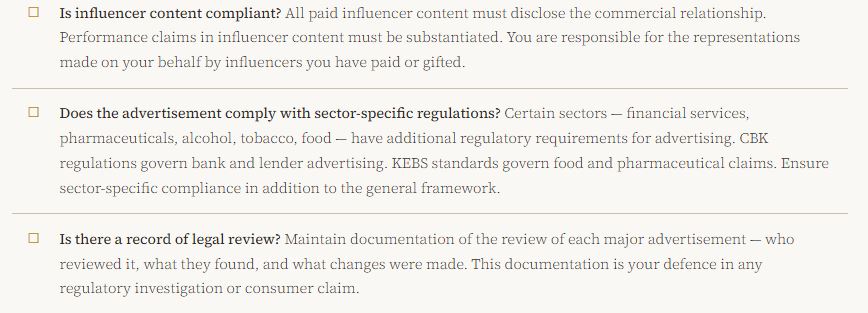
The principles that have governed advertising liability since Carlill in 1893 apply with equal and in some respects greater force in the digital environment. A Facebook post is an advertisement. A WhatsApp status is an advertisement. An influencer’s Instagram story is an advertisement. A sponsored TikTok video is an advertisement. The medium is new; the legal obligations are not.
Digital advertising creates specific risks that traditional advertising does not, principally because of scale and persistence. A television commercial seen by two million viewers is gone when the broadcast ends. A Facebook post that goes viral may be seen by twenty million people across three countries, shared, screenshotted, and circulated indefinitely. If that post contains a binding offer or a false representation the scale of potential liability is correspondingly greater.
Promotional Offers, Contests and Loyalty Schemes
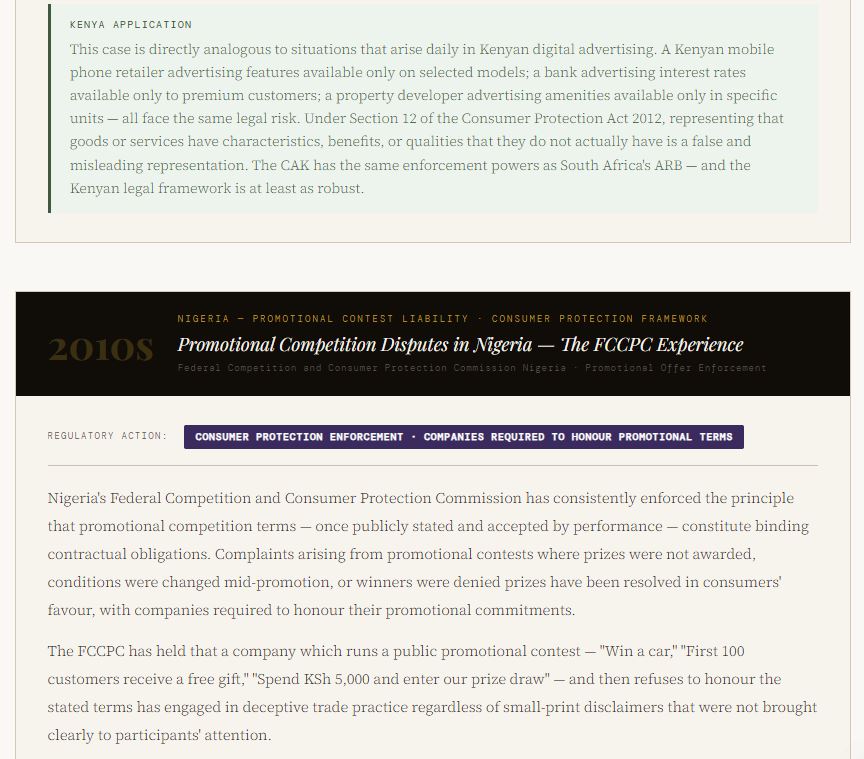
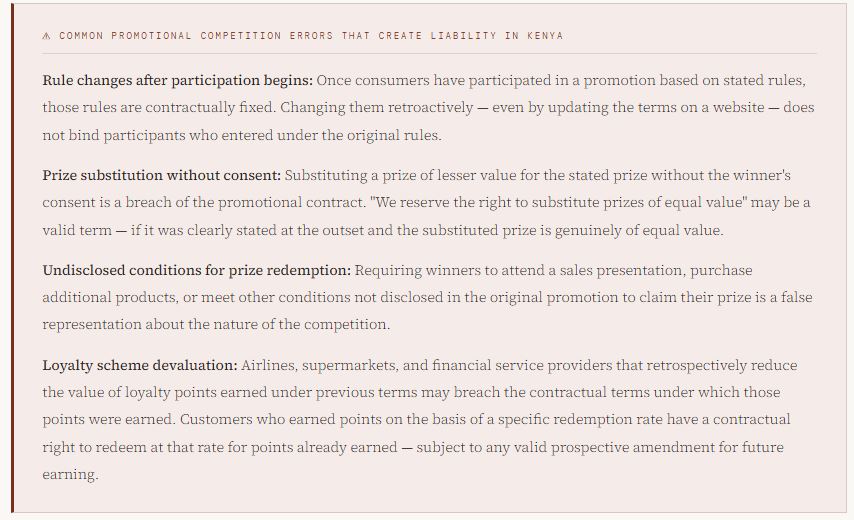
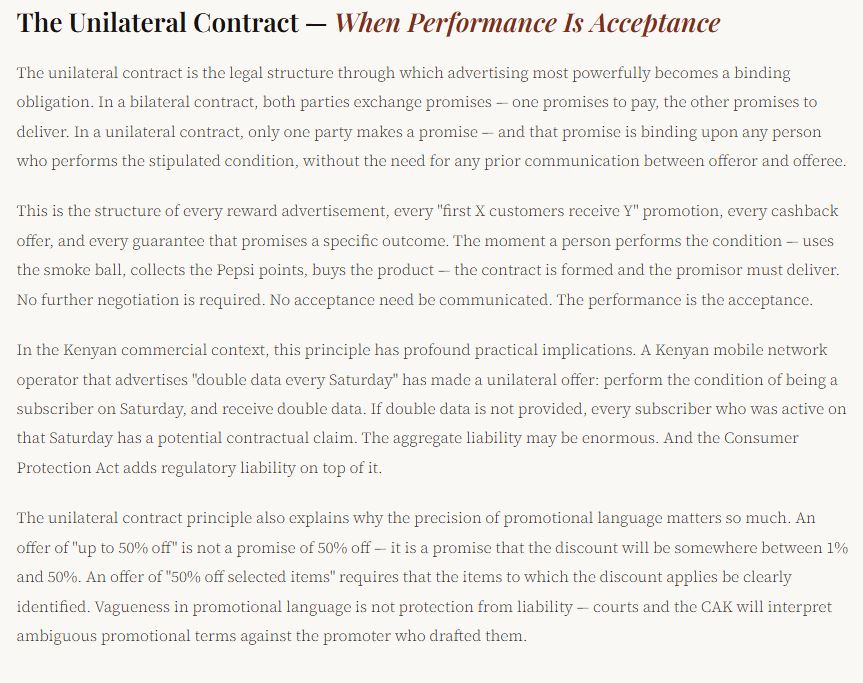
Promotional competitions, prize draws, loyalty reward programmes, and cashback offers are the commercial context in which the Carlill principle most directly applies in contemporary Kenyan commerce. Every such promotion, properly understood, is a unilateral contract offer: “If you do X [buy our product, collect points, participate in the competition], we will give you Y [the prize, the cashback, the reward].” Once a customer performs the condition, the contract is formed and the promoter must deliver.
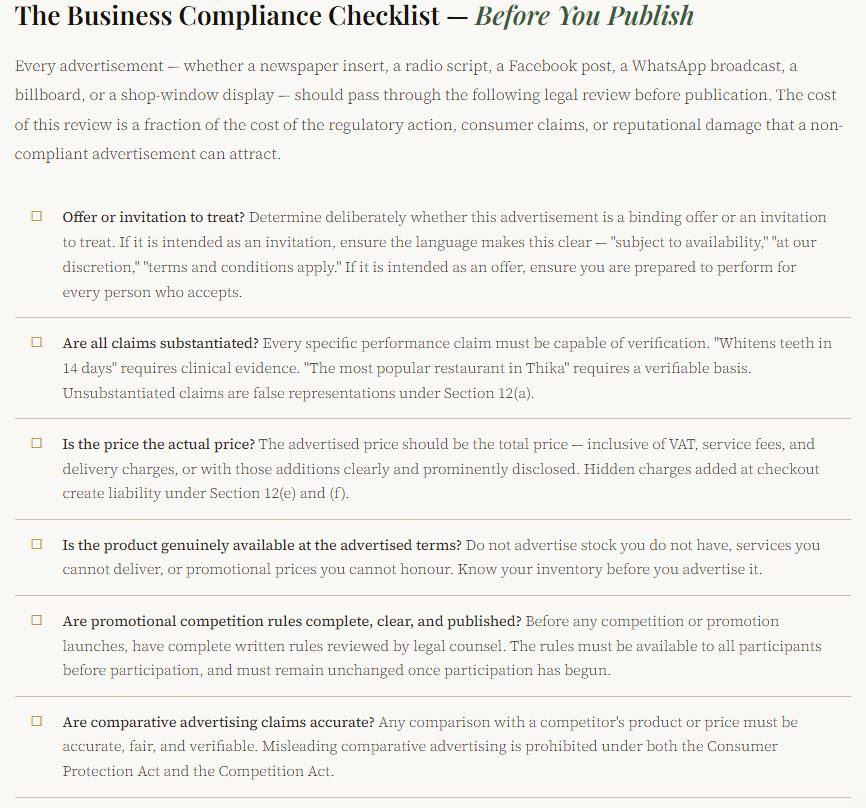
Section 58 of the Consumer Protection Act 2012 governs promotional competitions specifically. It requires that: the rules of any promotional competition be clearly stated in the promotion; the prizes be genuinely available as described; the selection process for winners be conducted as stated in the rules; and the results be announced as promised. A promoter who changes the rules mid-competition, fails to award the stated prizes, or selects winners through a process different from that advertised has breached both the contractual obligation to participants and the statutory requirements of Section 58.
For Those Who Advertise — and Want to Do It Safely
Every business that markets itself makes representations. Every representation carries legal consequences some minor, some transformative. The distance between a promotional campaign that builds your brand and one that creates a liability larger than your annual revenue is, in many cases, the quality of legal advice sought before the advertisement was published rather than after.
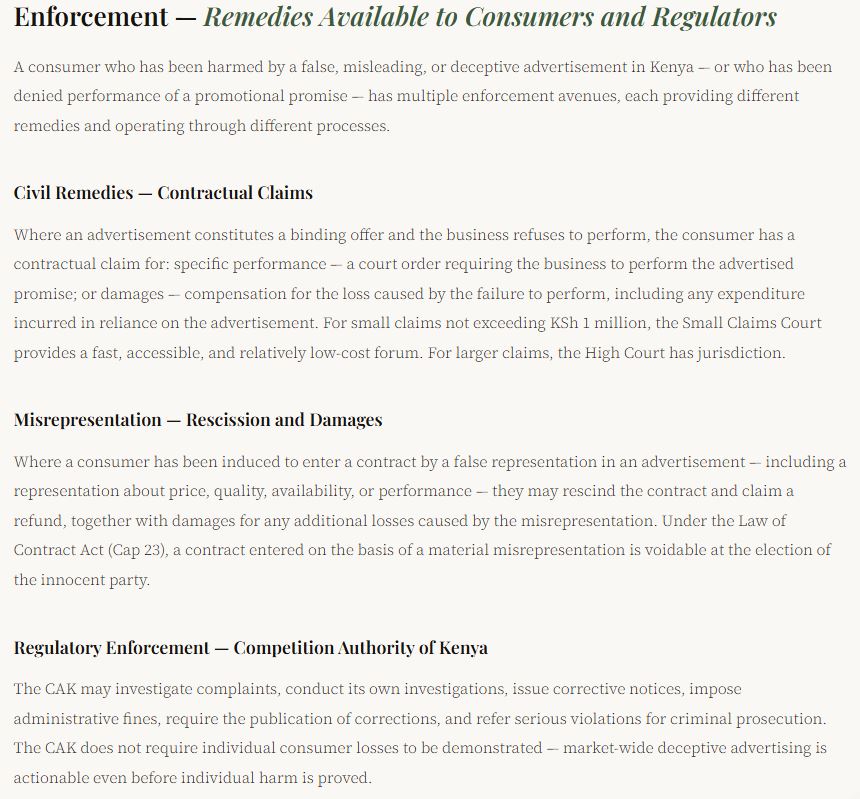
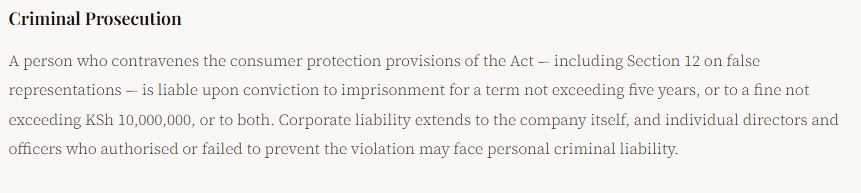
We advise businesses on the legal character of their advertising whether specific campaigns constitute binding offers or invitations to treat; whether promotional terms are enforceable or create unintended liability; whether price advertising complies with the Consumer Protection Act; and whether digital marketing practices expose the company or its directors to regulatory sanction. We also advise businesses that have received complaints from consumers, from the Competition Authority, or from competitors — about the accuracy or fairness of their advertising, and we represent them in regulatory proceedings and commercial disputes arising from advertising claims.
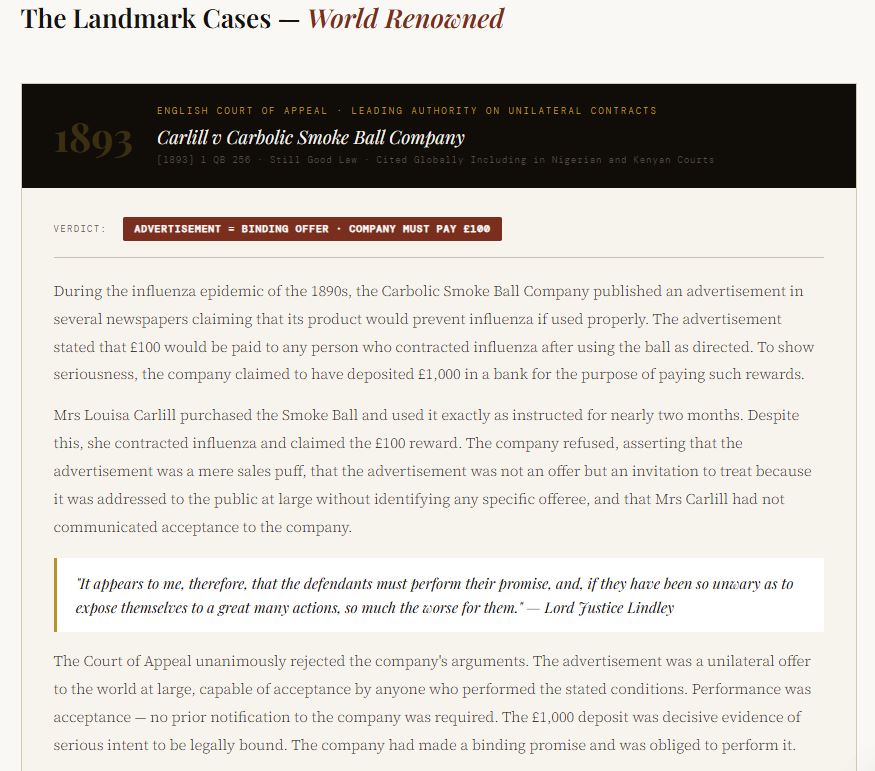
The Carbolic Smoke Ball Company was so unwary as to expose themselves to a great many actions, Lord Justice Lindley said in 1893. So much the worse for them.
Our role is to ensure our clients are not similarly unwary that their marketing is as legally considered as it is commercially creative. If you are planning a significant promotional campaign, reviewing an advertisement that has generated complaints, or managing a consumer protection investigation, we are available for a confidential discussion.
· O.M.O Law · Nairobi · Thika · Nakuru · Kenya · This article constitutes general legal information only and does not constitute legal advice on any specific matter. Advertising compliance is fact-specific. Contact us for advice on your specific circumstances.